
Fast-cure coatings for garages and basements
Polyaspartic Floor Coating in Ann Arbor, MI
Back on the floor in about a day or two, with a topcoat that holds its color in sunlight.
- Free on-site estimate with a slab moisture test
- Itemized written quote before any work begins
- Full diamond grind and crack repair under every coating
When Speed and Temperature Matter
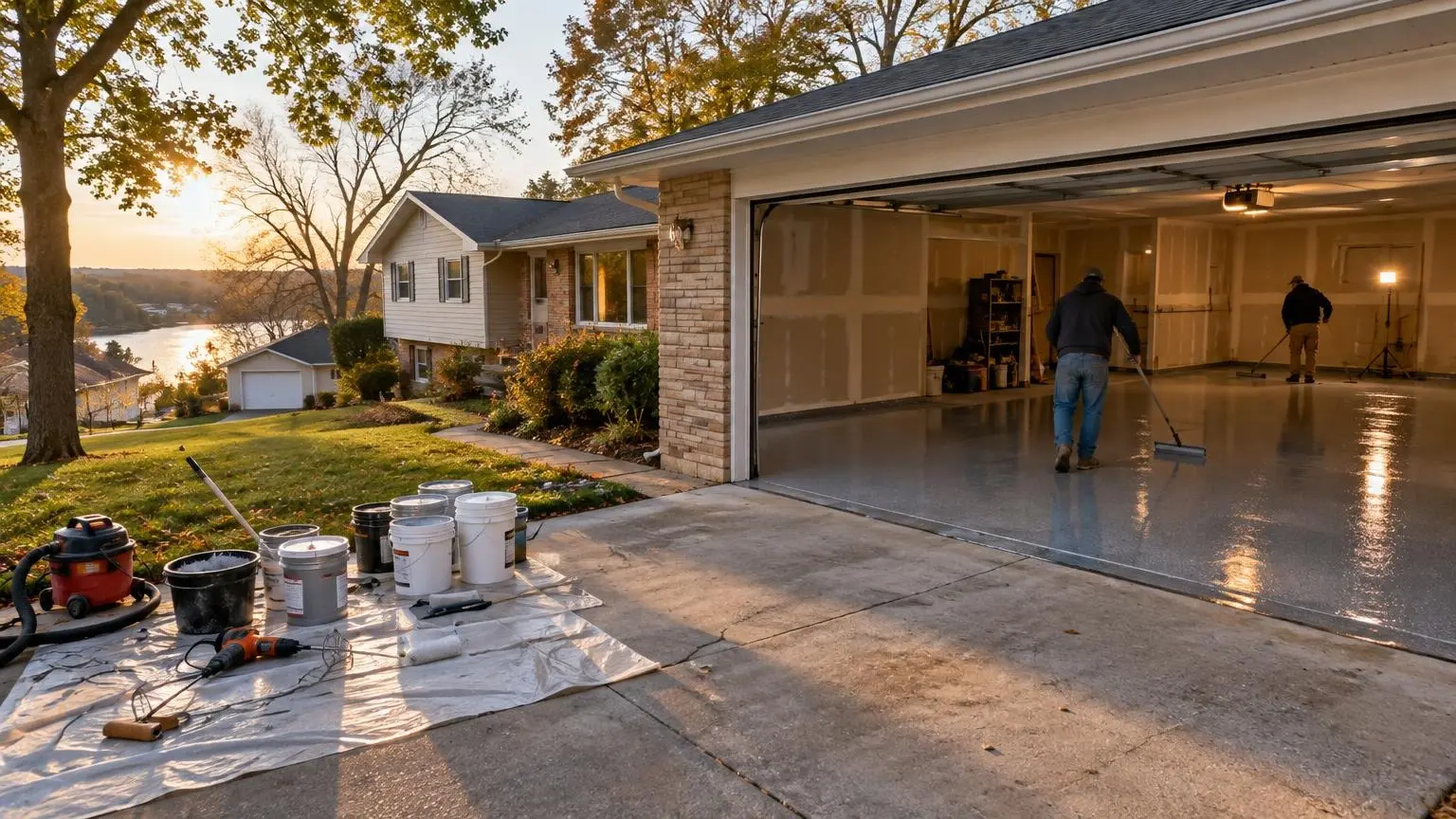
Polyaspartic floor coating is a type of polyurea that cures much faster than standard epoxy. In Ann Arbor that speed solves two problems. It shortens the time your car sits in the driveway, and it widens the window for working in cold weather. Michigan homeowners often decide to fix the garage floor in fall, right before the snow starts, and polyaspartic is often what makes that schedule work.
How it differs from epoxy
Standard epoxy goes on thick, about 10 to 20 mils per coat according to HomeGuide, and takes days to fully cure. Polyaspartic goes on thinner, about 2 to 6 mils per coat, and reaches a hard cure in a day or two. It also holds its color in sunlight, where many epoxies yellow over time. Many of our systems combine the two: an epoxy base for build and bond, with a polyaspartic topcoat for UV and wear resistance. Others are polyaspartic from the base up when speed matters most.
Cold-weather installs
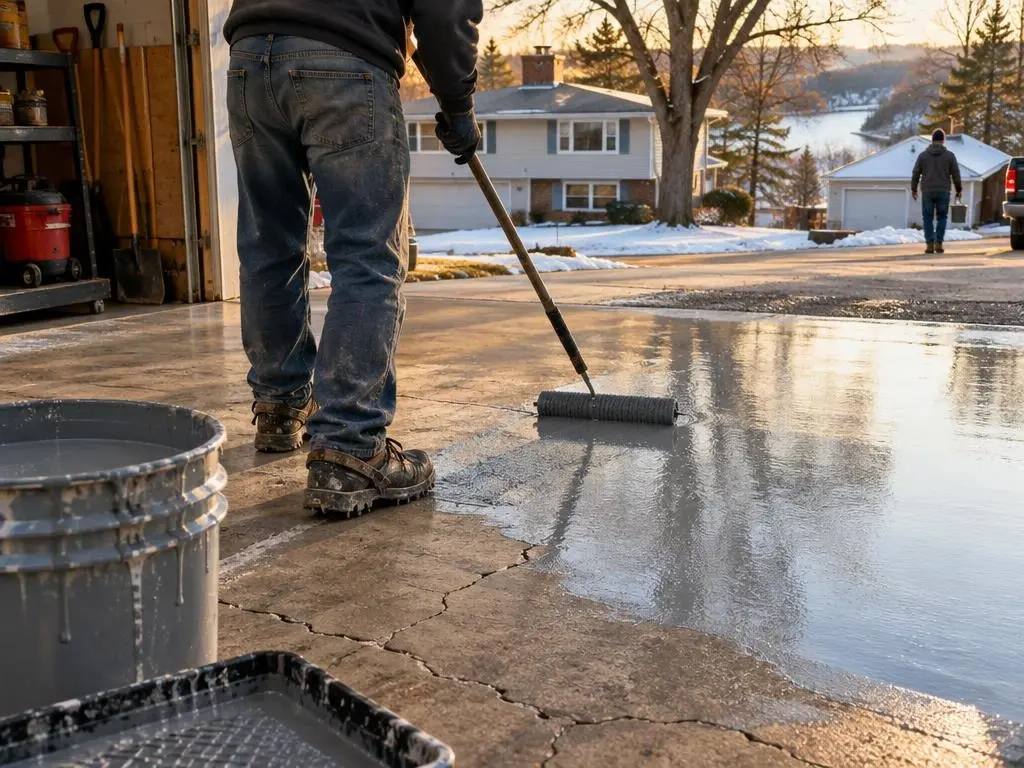
Resin needs warmth to cure. Standard epoxy slows down a lot as temperatures drop, and an unheated garage in November can sit below what many epoxies allow. HomeGuide lists polyaspartic with an application range of -30°F to 140°F. Each product has its own limits, so we still check the slab temperature with a thermometer on the day and heat the space if needed. When conditions fall outside what the product allows, we reschedule.
What fast curing asks of the crew
Polyaspartic sets quickly in the bucket and on the floor, so it is mixed in small batches and spread fast. That leaves less time to fix mistakes than slow epoxy does, and it is one reason polyaspartic is rarely sold as a DIY kit. It also means prep has to be finished and the floor fully clean before the first batch is mixed.
Sun, heat and hot tires
Garages with west-facing doors that stay open on summer afternoons get a lot of UV on the front few feet of floor. A UV-stable topcoat keeps that strip from turning yellow while the back of the garage stays clear. Hot tires after a summer drive can also soften and lift weak coatings. A ground slab with a properly bonded system holds up to both.
Is polyaspartic right for your floor?
- You want to park on the floor within a day or two
- The job is scheduled in spring, fall or winter
- Sunlight reaches the floor through an open door or windows
- You want a topcoat that resists abrasion from tools, bikes and carts
On a damp basement slab, the moisture problem comes first. A polyaspartic topcoat can still finish the floor, but the primer underneath has to suit the moisture reading.
What This Covers
A polyaspartic job can be a full system or a topcoat over an epoxy base.
Moisture and hardness testing
Readings taken before we choose the primer and system.
Diamond grind and repair
Full grind to open concrete, with cracks and joints filled.
Polyaspartic or hybrid system
All-polyaspartic for speed, or an epoxy base with a polyaspartic topcoat for build.
Flake or solid color
Any finish we offer can sit under a polyaspartic clear coat.
Typical Polyaspartic Floor Coating Costs
| Item | Published range |
|---|---|
| Per square foot, installed | $5 to $12 |
| One-car garage (288 to 392 sq ft) | $1,400 to $4,700 |
| Two-car garage (400 to 576 sq ft) | $2,000 to $6,900 |
| Three-car garage (576 to 864 sq ft) | $2,900 to $10,400 |
| Extra prep (repairs, resurfacing) | $1 to $5 per sq ft |
| Moisture and hardness testing | $50 to $300 |
National ranges from HomeGuide's polyaspartic floor coating cost guide. Prep, flake and moisture work change the total for a given floor. Your written estimate is the price.
How It Works
1. Test the slab
Moisture, hardness and temperature readings, plus a look at cracks and old coatings.
2. Prepare
Grind, vacuum and repair so the surface is open and clean.
3. Coat in batches
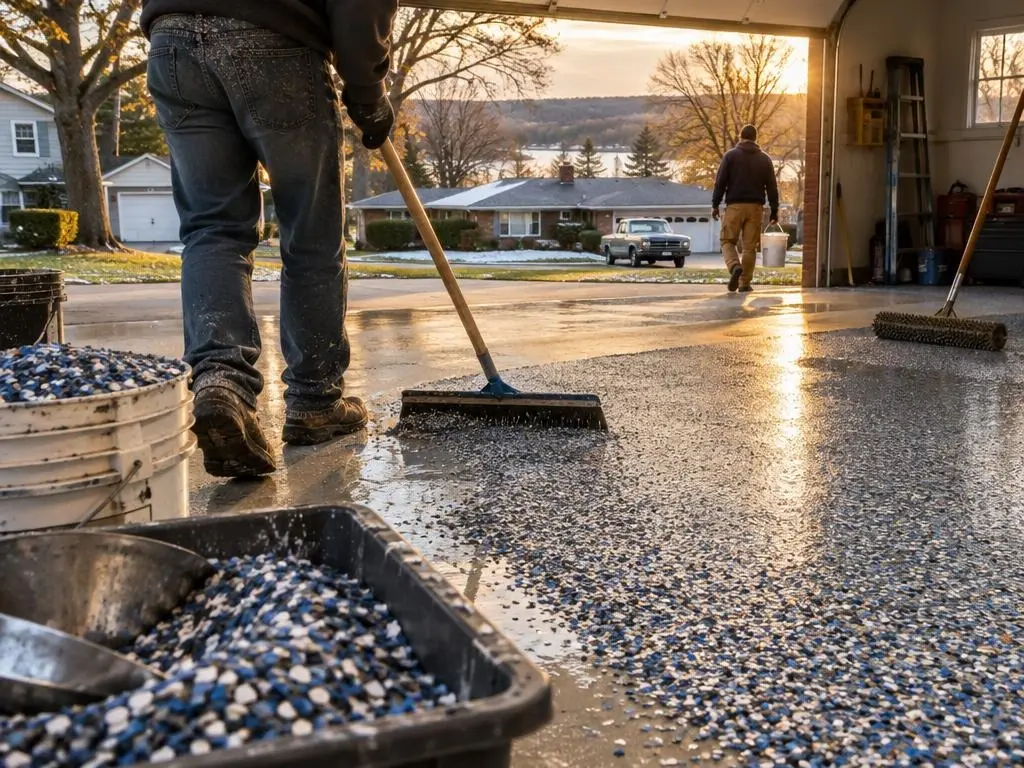
Small batches are mixed and spread quickly; base, flake or color, then clear.
4. Back in service
Light foot traffic within hours and vehicles typically in 24 to 48 hours.
Polyaspartic Floor Coating Questions
Is polyaspartic better than epoxy for a Michigan garage?
It cures faster, handles cold weather better and resists yellowing, which helps here. Epoxy builds thicker per coat and costs less. A hybrid with an epoxy base and polyaspartic topcoat gives you some of both.
How long until I can drive on a polyaspartic floor?
HomeGuide says full cure for vehicles takes about 24 to 48 hours. Cooler slabs sit at the longer end. We give you a specific time on install day.
How long does a polyaspartic coating last?
HomeGuide puts residential polyaspartic floors at 10 to 20 years or more. Prep, coating thickness and how the floor is cleaned in salt season decide where yours lands.
Can polyaspartic be installed in winter?
Often, yes. It has a much wider application temperature range than standard epoxy. We still check slab temperature and the specific product's limits, and heat the space or reschedule when needed.
Polyaspartic Floor Coating Service Areas
- Epoxy Flooring in Ann Arbor, MI
- Epoxy Flooring in Ypsilanti, MI
- Epoxy Flooring in Ypsilanti Township, MI
- Epoxy Flooring in Pittsfield Township, MI
- Epoxy Flooring in Scio Township, MI
- Epoxy Flooring in Ann Arbor Township, MI
- Epoxy Flooring in Superior Township, MI
- Epoxy Flooring in Saline, MI
- Epoxy Flooring in Dexter, MI
- Epoxy Flooring in Chelsea, MI
- Epoxy Flooring in Manchester, MI
- Epoxy Flooring in Milan, MI
- Epoxy Flooring in Whitmore Lake, MI
- Epoxy Flooring in Brighton, MI
- Epoxy Flooring in Howell, MI
- Epoxy Flooring in Pinckney, MI
- Epoxy Flooring in Hamburg Township, MI
- Epoxy Flooring in Genoa Township, MI
- Epoxy Flooring in Green Oak Township, MI
- Epoxy Flooring in Hartland Township, MI
- Epoxy Flooring in Monroe, MI
- Epoxy Flooring in Dundee, MI
Get a Polyaspartic Floor Coating Estimate
Free polyaspartic coating estimates across Washtenaw County.